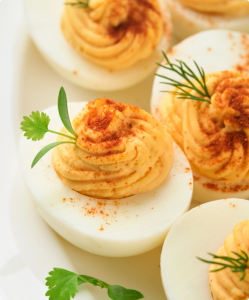

Good Nutrition at an Affordable Price
The egg is one of the most complete and versatile foods available. It consists of approximately 10% shell, 58% white, and 32% yolk.
Eggs contain the highest quality protein available and almost every essential vitamin and mineral needed by humans, except vitamin C. Chickens can produce their own vitamin C and do not require it from their diet.
Egg protein is of such high quality that it is used as the standard by which other proteins are compared. Eggs have a biological value (efficacy with which protein is used for growth) of 93.7%, compared to 84.5% for milk, 76% for fish, and 74.3% for beef.
With the focus on cholesterol, consumers often overlook that eggs are nutrient-rich, affordable contributors to a healthy diet.

Energy and Macronutrients:
The egg yolk is particularly rich in nutrients. Here's a breakdown of its key components:
Vitamins:
Egg protein is of the highest quality and easily digestible. Almost all the fat in an egg is found in the yolk and is easily digested.
Minerals:
Nutrient Density
Eggs contribute significantly to the nutritional quality of a healthy diet. While eggs provide only 1.3% of the average caloric intake, they contribute a greater proportion of nutrients:
When a food provides more nutrients than calories to the average diet, it deserves to be called “nutrient dense” and should be part of everyone’s diet.
Egg History
Ancient Origins: Birds and their eggs existed long before humans appeared in the evolutionary timeline. East Indian history indicates wild fowl domestication around 3200 B.C., while Egyptian and Chinese records show domesticated fowl laying eggs for humans by 1400 B.C.
European Domestication: Domesticated hens have been in Europe since 600 B.C. There is some evidence of native fowl in the Americas before Columbus, but it is believed Columbus brought chickens on his second voyage in 1493, introducing the strains from Asia that are now common in egg production.
Chicken Varieties: Nearly 200 breeds of chickens exist worldwide, but only a few are significant for egg production. In the U.S., the Single-Comb White Leghorn is the most common breed for laying hens.
Cultural Practices: Eggs have been colored, blessed, exchanged, and consumed during spring rites long before the advent of Christianity. French brides traditionally break an egg on the threshold of their new home for luck and fertility.
Culinary History: By the time of the French Revolution, the French knew 685 ways to prepare eggs, highlighting their culinary versatility.
Egg Production
Scale of Production: Approximately 280 million hens in the U.S. produce around 60 billion eggs annually, averaging one hen per person in the country.
Chicken Breeds and Egg Colors: Hens with white feathers and ear lobes lay white-shelled eggs, while hens with red feathers and ear lobes lay brown-shelled eggs.
Laying Frequency and Diet: A hen starts laying eggs at 19 weeks and can produce 300 to 325 eggs annually. It takes 4 pounds of feed to produce a dozen eggs. The hen requires 24-26 hours to produce one egg, consuming 5 oz. of food and 10 oz. of water.
Egg Varieties: Occasionally, hens produce double-yolked eggs or very rarely, no-yolk eggs. The yolk color depends on the hen’s diet, with maize-rich feed producing golden yolks and grain-heavy diets producing lighter yolks. The taste in the eggs come from maize or corn rich diets.
Egg Sizes: Eggs are categorized by size during packing, Nelfarms follow USDA egg grading standards and while 7 grades are created through Automated egg grading. Only 3 grades, Medium, Large and Xl are packed and sold through modern trade.
Fun Facts
Record-Breaking Eggs: The largest chicken egg weighed a pound with a double yolk and shell. The most expensive egg, the Faberge “Winter Egg,” sold for $5.6 million in 1994.
Equinox Phenomenon: During the spring equinox, some believe an egg can stand on its small end, though results vary.
National Egg Month: May is National Egg Month, celebrating the egg’s benefits.
Omelet King: Howard Helmer holds the Guinness World Record for making 427 two-egg omelets in 30 minutes.
Egg Quality & Storage
Maintaining Quality: Proper storage is crucial for maintaining egg quality. Eggs lose as much quality in one day at room temperature as they do in 4-5 days in the refrigerator.
Avoid Strong Odors: Store eggs away from strong-smelling foods and sunlight. Rotate stocks to ensure older eggs are used first.
Handling Tips: Avoid rough handling and exposure to heat. At home, store eggs in their carton in the refrigerator to prevent damage, moisture loss, and odor absorption.
Egg Whites:
Egg Yolks:


Eggs as a Nutritional Powerhouse: Eggs are rich in proteins, vitamins, and minerals, offering numerous health benefits.
Proteins for Growth and Repair: The proteins in eggs are essential for growth, tissue repair, and overall body maintenance.
Muscle Building and Repair: Eggs are particularly valuable for building and repairing muscles, making them an excellent choice for fitness and overall well-being.
High-Quality Protein: The proteins in eggs contain all the essential amino acids that the body cannot produce on its own.

The Tier we adhere to the highest global standards in their operations. We maintain our products in compliance with international certifications, ensuring safety, quality, and traceability throughout the food chain. These certifications include:
ISO 22000: A food safety management system that guarantees safe products that meet both customer and regulatory demands.
HACCP: A preventive food safety approach developed by NASA, focusing on identifying and controlling biological, chemical, and physical hazards during production.
GMP (Good Manufacturing Practices): Ensures consistent, high-quality production of food products.
Antibiotic-Free Policy: Introduced in 2019, this policy reduces the risk of antimicrobial resistance, ensuring the safety and health of consumers.
NelFarms, as a leading producer in Sri Lanka, proudly holds all these certifications, reflecting its commitment to the highest standards of poultry production.